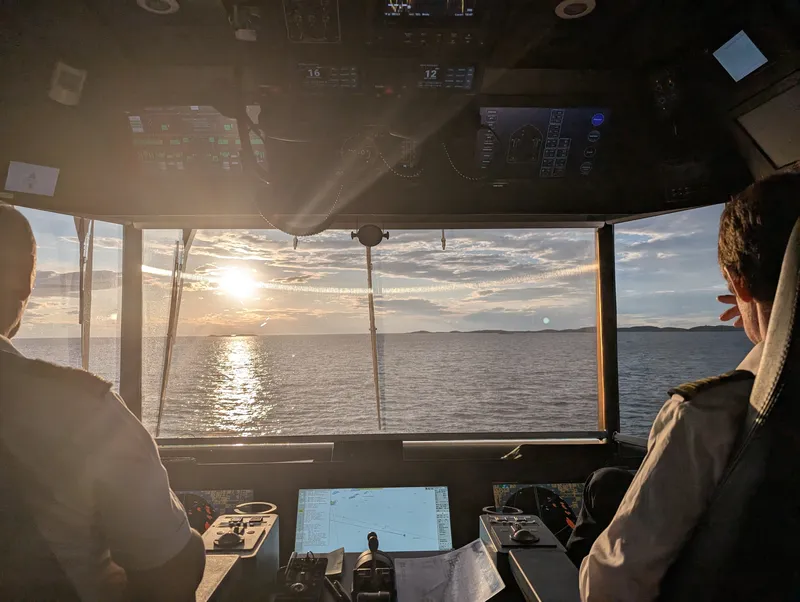
View from a fishing vessel bridge during operations at sea

MarRest vs Watchkeeper: Choosing the Right Fit for Your Fleet

If you are searching for a Watchkeeper alternative, start with the vessels you operate and the records inspectors ask for. This guide compares MarRest and ISF Watchkeeper for managers, masters, and auditors who need work/rest records that hold up in daily use.

At-a-glance comparison

Both systems support rest-hour records, but they come from different operating contexts. Use the table as a starting point, then test each product against your own watch changes, transfers, and inspection routines.

Area Watchkeeper MarRest
Built for Global merchant fleets Fishing fleets
Regulatory coverage Broad STCW Fishing-specific workflows
Platform heritage Desktop install heritage Browser-based workflow
Market presence Strong international Norwegian fishing industry focus
Core capability Work/rest record keeping Work/rest records with earlier fatigue checks
Wheelhouse controls on a working fishing vessel
Watchkeeping decisions and rest tracking happen side by side on the bridge.

Why this is not a winner-takes-all decision

A software decision for maritime compliance is rarely about one platform being universally better. It is usually about operating assumptions: what kind of vessel you run, how predictable your schedule is, which regulations dominate your inspection exposure, and how much variance your crew patterns face during weather and catch windows.

Watchkeeper has earned trust in international shipping contexts where voyage cycles and department structures are more standardized. MarRest was built for fishing operations where watches can change quickly and fatigue risk may appear before a formal breach is logged.

The useful question is not which brand sounds better. It is whether a fishing-oriented workflow would make your records easier to keep, review, and explain.

Fleet-type fit is the key factor

The most important selection question is simple: Are your operational realities closer to merchant-fleet routines or fishing-fleet routines? If your vessel group follows relatively stable passage plans, long-cycle crewing, and a compliance process already aligned with broad STCW reporting patterns, Watchkeeper may continue to be a strong fit. If your fleet operates in intensive fisheries with frequent watch rearrangements, seasonal pressure spikes, and inspection focus on fishing-specific evidence quality, a specialized platform like MarRest often gives better control.

Two systems can both log hours and generate reports while feeling very different on board. What matters is how quickly officers can record what happened, how clearly deviations show up, and whether shore sees repeated problems early enough to act.

When Watchkeeper is right

There are several situations where Watchkeeper is a rational choice and should not be dismissed:

1) You manage a merchant-dominant vessel portfolio

If your compliance baseline, terminology, and training materials were developed around merchant vessel conventions, keeping an established tool can reduce transition risk. This is especially true if your fleet crews already work comfortably with existing forms and reporting sequences.

2) Your organization prioritizes broad international standardization

Operators with many vessel classes across multiple flag contexts often need consistency over specialization. In such environments, broad STCW support and long-standing international adoption can be operationally valuable.

3) Your audit process already works

If internal audits, superintendent reviews, and external inspections already show high confidence in your current records, replacing tooling may offer limited upside. In that case, it can be better to improve process discipline around an existing stack.

4) Change-management capacity is currently constrained

Software migration affects vessel routines, training plans, and shore reporting. If your change bandwidth is limited due to simultaneous projects, postponing platform transitions until a calmer period can be prudent.

5) You need continuity across mixed vessel categories

Some groups run mixed merchant and fishing operations and intentionally keep one system. That can work, provided fishing-specific risk controls are still handled through procedures and review.

When MarRest is right

MarRest is typically the stronger option when your hardest problems come from fishing-specific variation, not generic reporting gaps:

1) You operate fishing vessels with variable watch and work rhythms

Fishing activity can force rapid role shifts. A browser-based workflow built around this variability makes it easier to capture actual time and exception reasons while events are fresh.

2) You need earlier fatigue signals, not only compliance snapshots

Traditional logs often show the breach after it happened. MarRest is designed to show warning signs earlier, so masters and shore staff can adjust workload before repeated deficits become normal.

3) Norwegian fishing-industry context drives your inspection exposure

If your inspections and documentation practices are tied closely to Norwegian fishing operations, software built around that context can reduce explanation work for crew and office.

4) You want better operational integration with fishing-specific planning

Compliance quality improves when watch plans, operations plans, and rest records stay aligned. MarRest is designed for fishing workflows where those records often diverge during high-intensity periods.

5) You are moving away from spreadsheet-dependent controls

Many fleets searching for a Watchkeeper alternative are also trying to end spreadsheet patchwork. If that is your position, read why fishing fleets outgrow spreadsheets as a companion decision document.

Decision lens: after-the-fact records vs next-watch checks

The practical difference is timing. One workflow answers, "Did the records comply?" The other also asks, "Will the next watch create a problem?" For fishing vessels, that earlier warning matters during weather windows and catch peaks.

In practical terms, earlier warning means:

  • Flagging cumulative rest deficits early.
  • Linking schedule changes to expected rest impacts.
  • Documenting corrective actions in a structured way.
  • Showing shore teams where repeated risk is building.

These features do not replace the legal limits. They help crews act before the limit is crossed.

Implementation reality: what changes after selection

No software can compensate for unclear ownership. Before selecting any platform, define who enters hours, who reviews them, who escalates repeated warnings, and who signs off reports.

Onboard level

Crews need fast, low-friction logging tied to actual operations. If interfaces are cumbersome, backfilling starts, timestamps degrade, and record quality drops. Evaluate usability in real watch conditions, not just office demos.

Fleet management level

Shore teams need trend visibility. Vessel-level snapshots are useful, but fleet dashboards that show repeat risk patterns are what drive preventive action and training prioritization.

Inspection readiness level

Inspectors compare planned schedules, actual records, and corrective actions. A good platform makes that comparison easy. A weak workflow forces teams to rebuild the story manually.

Five questions to ask before choosing

Use recent trips, not demo data, when comparing tools.

Operational fit test

Map three recent high-pressure voyages and test whether each system captures real deviations cleanly. Include weather disruption and crew reshuffle scenarios.

Regulatory fit test

Run sample reports against your most common inspection questions. For fishing operators, compare outcomes with your own STCW-F and local documentation expectations. The STCW-F compliance guide can support this step.

Adoption fit test

Measure time-to-proficiency for masters and officers. If training load is too high, compliance quality will dip during transition.

Exception management test

Trigger known breach patterns in a test environment and observe how fast each system surfaces risk and supports corrective documentation.

Shore review test

Confirm whether shore staff can see repeated warnings, late entries, and open corrective actions without building a separate report.

Common misconceptions in Watchkeeper alternative searches

"If both systems can produce reports, they are equivalent."

Reporting output is only one layer. Input reliability, exception context, and intervention support are equally important.

"Fleet culture matters more than software."

Culture matters deeply, but tools shape behavior. If the tool makes correct behavior easy and risky behavior visible, culture change is faster and more durable.

"Migration risk always outweighs potential gain."

Migration does introduce risk, but so does staying with a misaligned process. The right comparison is transition risk versus ongoing non-compliance and fatigue risk.

"One policy document can bridge any software gap."

Policies help, but if the workflow does not match the vessel day, policy alone will not produce reliable records in high-pressure operations.

How mixed fleets can make balanced choices

For groups running both merchant and fishing units, a binary all-or-nothing decision is not required. Some operators keep Watchkeeper in merchant segments and deploy MarRest in fishing segments, then use shared KPI definitions and monthly review templates.

The critical requirement is discipline between the systems:

  • Define common breach categories across systems.
  • Use one escalation threshold set for management review.
  • Standardize corrective action language for audit consistency.
  • Maintain one management view for repeated breaches and open actions.

This approach lets each vessel type use a suitable workflow while shore still sees the same core risk picture.

Compliance outcome indicators to monitor after rollout

Whether you choose Watchkeeper, MarRest, or a mixed strategy, track the outcomes that show whether the record routine is working:

  • Frequency of repeated rest breaches by vessel and role.
  • Time between first warning signal and management intervention.
  • Share of records entered on time versus backfilled.
  • Inspection findings related to documentation coherence.
  • Fatigue trend indicators across high-intensity fishing periods.

Improvement in these indicators is the test. A long feature list is not enough.

What "good fit" looks like in daily operations

A good-fit platform fits the routine. Officers spend less time rebuilding records. Masters can explain deviations. Shore teams see exceptions before they grow.

For many fishing operators, this is where MarRest differentiates as a Watchkeeper alternative: not by denying Watchkeeper strengths, but by reducing friction in the specific places fishing operations struggle most. Conversely, for operators whose profile aligns tightly with merchant workflows, Watchkeeper may remain the better continuity choice.

Next step: choose with evidence, not assumptions

If you are actively deciding, build a 60-day pilot with predefined success criteria: breach trend reduction, record quality, intervention speed, and officer usability scores. Include one representative high-pressure period, not only routine days. Review outcomes with vessel leaders and shore compliance together.

For fishing-focused operators, pair this guide with:

Buying checklist for a fair decision

Use a short written checklist instead of relying on the best demo. Focus on what affects the crew and the next inspection.

Commercial and contract readiness

Assess contract terms that affect long-term control: data export rights, support coverage during high-intensity fisheries, response SLA expectations, and onboarding scope. A lower headline price can become expensive if data portability is weak or support windows do not match vessel operations.

Technical and deployment readiness

Map connectivity assumptions for your vessel profile, browser/device support for onboard teams, and update cadence impacts. Merchant-oriented and fishing-oriented products may prioritize different deployment assumptions, so validate your real environment early.

Operational and human-factor readiness

Interview vessel officers and compliance managers before final selection. Ask where current process friction appears and which tasks consume the most time under pressure. Choose the platform that reduces those bottlenecks while preserving legal confidence.

Internal review readiness

Define how the new platform will be checked after rollout: same-day entry rate, record completeness, repeated exceptions, and closure of corrective actions.

From decision to stable operations

Selection is only half the work. The first months after go-live decide whether the tool becomes part of the watch routine or another office task.

First: baseline and data cleanup

Before migration, clean your baseline data categories and definitions. Standardize role names, exception categories, and shift notation. Inconsistent historical data can hide trend improvements and create confusion during management reviews.

Next: pilot vessels and pressure testing

Pick pilot vessels that represent different operating patterns, including at least one high-variability fishing profile. Conduct pressure tests that simulate weather disruptions, gear events, and staffing surprises. If the workflow fails under pressure, redesign before fleet-wide rollout.

Then: training built around scenarios

Do not train users only on ideal workflows. Train around realistic scenarios that produce exceptions. Crew confidence grows faster when they practice variance documentation, corrective action logging, and escalation routines before real incidents occur.

Set shore-side review cadence

Set fixed review cadence immediately after go-live: daily quick checks for pilot vessels, weekly compliance board reviews, and monthly management reporting. Early cadence prevents small process drift from becoming a systemic data-quality problem.

Scale only when pilot routines hold

Expand rollout only when pilot routines are stable for at least one full review cycle. Useful gates include same-day entry rate, repeated breach reduction, and closure of corrective actions.

Scenario analysis: how fit appears in real situations

Decision teams often ask, "How would this system behave in our hardest week?" Scenario analysis makes that question concrete and easier to answer.

Scenario A: Stable merchant schedule with predictable duty rotation

In stable duty environments, established compliance logging and broad STCW process continuity may be the main value. This is where Watchkeeper often remains a natural fit if current review routines work and findings are low.

Scenario B: Seasonal fishing surge with repeated watch rearrangements

In surge conditions, the critical requirement is fast variance capture, early fatigue signaling, and frequent corrective coordination between vessel and shore. This is where MarRest often shows stronger practical fit for fishing operators.

Scenario C: Mixed fleet group with central reporting

A mixed strategy can work if the group keeps one KPI definition library and one escalation matrix. Let local software fit the vessel type while management reporting stays comparable.

Scenario D: Inspection cycle approaching with uneven record quality

When record quality is inconsistent, platform usability and exception workflows become decisive. Teams should prioritize whichever system allows fast cleanup with clear reasons and minimal manual reconstruction.

Final selection questions

Before deciding, answer these questions from pilot results and vessel feedback, not assumptions:

  • Fleet profile alignment (merchant-heavy vs fishing-heavy).
  • Regulatory evidence confidence in target inspection contexts.
  • Fatigue prevention capability and intervention usability.
  • Adoption speed for onboard users.
  • Data quality stability in high-pressure operations.
  • Cost-to-value over a three-year horizon.

Discuss the answers with operations, compliance, and vessel leadership present.

What success should look like after 12 months

After one year, the signs should be practical: fewer repeated exceptions, better match between plans and records, faster shore follow-up, and less last-minute audit cleanup.

If the chosen platform does not improve those outcomes, revisit ownership, training, and review cadence. The software can help, but the routine makes the change last.

Frequently Asked Questions

Is this page an attack on ISF Watchkeeper?

No. Watchkeeper is established and valuable for many operators. The goal is to help owners and managers match software to vessel type and daily work/rest routines.

What is the main difference in practical use?

The key difference is focus. Watchkeeper is widely used across global merchant fleets, while MarRest is designed around fishing-fleet operational patterns and local inspection expectations.

Which platform is better for Norwegian fishing vessels?

Fleets that operate under Norwegian fishing practices usually benefit from software optimized for those workflows. See Norwegian fishing vessel rest-hour compliance for detailed context.

Does Watchkeeper cover STCW style compliance tracking?

Yes. Watchkeeper is known for broad compliance tracking and has strong market presence internationally. It is often selected by operators that prioritize established merchant-fleet processes.

Does MarRest only track compliance?

MarRest combines work/rest records with earlier fatigue warnings, so supervisors can act before rest deficits become repeated breaches.

Can we migrate from spreadsheets before changing platforms?

Yes, and many fleets do. If you are still evaluating timing, review why fishing fleets outgrow spreadsheets first.

How does this comparison relate to STCW-F?

For fishing fleets, software choice should reflect STCW-F and related requirements. A practical overview is available in the STCW-F compliance guide.

Is there a fast way to evaluate operational fit?

Use your own vessel mix, watch patterns, and reporting duties as the baseline. Then compare system fit using the decision checklist in this guide and the STCW-F compliance checklist.

Can a fleet use one platform for some vessels and another for others?

Yes. Mixed strategy is common during transition periods, especially in groups with both merchant and fishing operations. Standardize data definitions and handover procedures to avoid reporting gaps.

See MarRest in Your Fleet

Request a free demo and walk through rest hour compliance with captains who built the system.

Request a Demo